
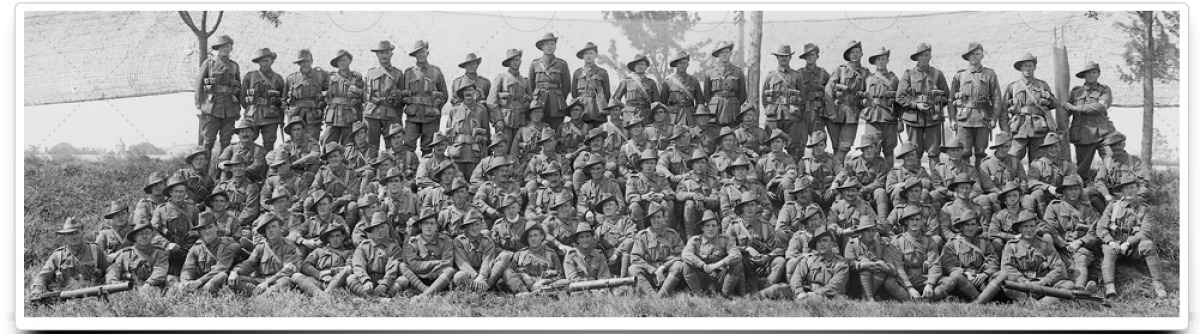
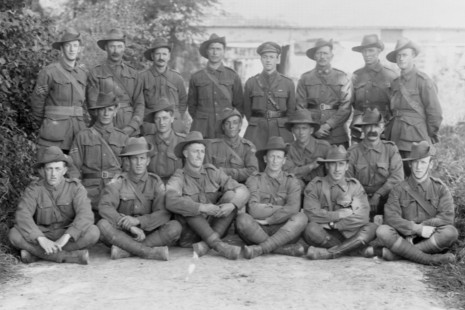
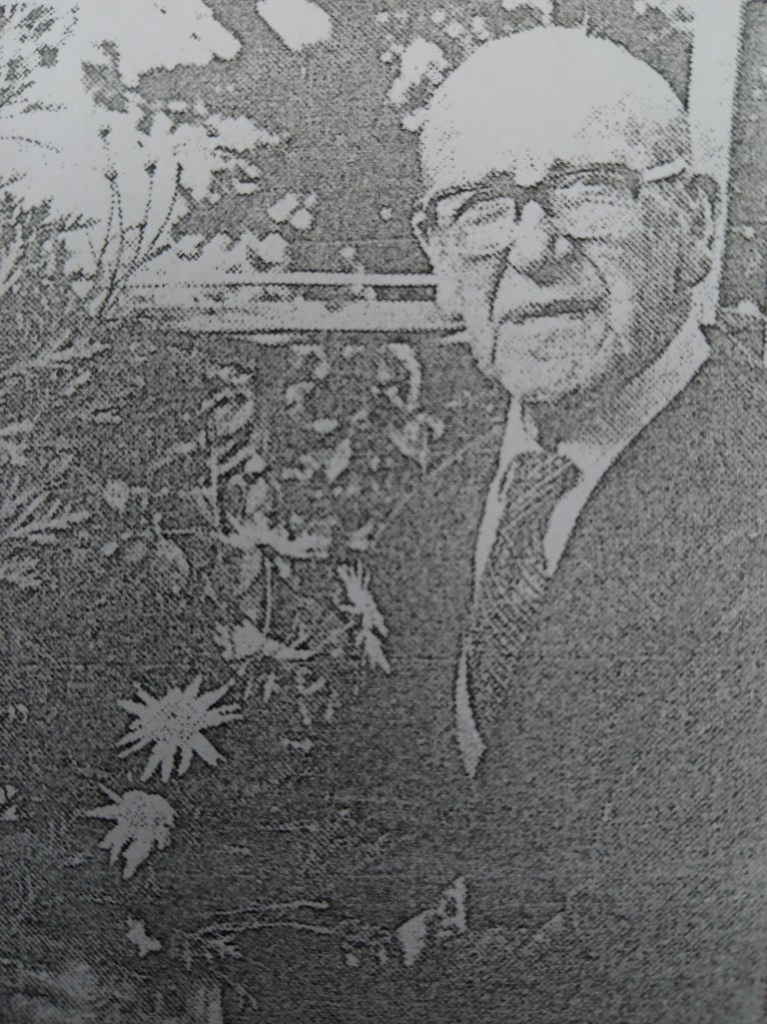
In 1981, following an article in a local newspaper, sociologist John Austin met and became friends with 91 year-old Ern Smart. What followed was a series of fascinating recorded conversations between the two men where Ern recalled his experiences of growing up in and around Melbourne at the turn of the century, before focusing on his time with the 22nd Battalion, from enlistment and training at Broadmeadows, sailing to and being in Egypt, and his personal life and death memories and experiences from Gallipoli to the Western Front in France and Belgium. Ernest Charles Smart was one of a handful of men that served with the 22nd Battalion that was neither wounded nor hospitalised through sickness and as a result was with the Unit throughout the war, thus his recollections are extensive and was of help to Captain Gorman when he wrote the battalion history ‘With the Twenty-Second’. In his interviews with John, Ern recalls his friendships and mentions many of the characters with the Battalion.
Ern lived a long and active life. A keen walker, traveller and gardener, Ern and his wife Violet were responsible for the revival and interest in the Vermont Horticultural Society and Garden Club. His faith also played an important part throughout his life, as can be heard in the interviews. Ern passed away in March 1983 at the grand old age of 93.
The following sixteen tapes are as originally recorded and unedited to enable complete accuracy and authenticity of these historic conversations. Copyright remains with John Austin, but sincere thanks to John for allowing us the opportunity to listen to these valuable memories of a soldier from the Great War.
Tape Number 1: Ernest Smart, his early life, family and growing up in and around North Melbourne and Preston.
Tape Number 2: life in Melbourne at the turn of the century – playing Boer war games as boys, food, work, a tough environment particularly when visiting the dentist or for medical needs; the importance of spiritualism, being a Methodist, views on a changing society; attachment to the Empire, but the different attitudes to social class between the British and Australians.
Tape Number 3: teenage and young adult life, apprenticeship and work, no money after board and lodgings; estranged with father; life in the church, Sunday School teacher and Superintendent; innocence of upbringing did not prepare for life in the camps; news and propaganda in the newspapers and from the pulpit on the cruelty of the Germans to the Belgian population to drive up recruitment.
Tape Number 4: mates Charlie Tucker (from church), Charlie Hutton; reasons for enlisting; signing up and heading to Broadmeadows; initial training; always a walker, so marching not a problem; attitudes by the soldiers to the conscription referenda; Australian refusal to use the death penalty; letter writing home, but no time to read newspapers when overseas; Colonel Crouch and the battalion motto.
Tape Number 5: packing up and leaving Broadmeadows; embarkation from Port Melbourne; life on board HMAT Ulysses; stop-over in Colombo; arrival and first impressions of Cairo, the Pyramids and the Nile delta; prostitution; leaving for Gallipoli; landing under fire at Anzac Cove, and the relief of the 1st Division at Johnston’s Jolly.
Tape Number 6: life in the trenches and dugouts, four months without relief; respect for the Turkish soldier; lack of water; food and drink; raids, and threat from snipers; home-made bombs; first sight of snow for many of the men; Colonel Crouch relieved and replaced by Major Smith; sickness, medical evacuations and Dr Drummond; mateship borne out of living under constant danger and risk; close shave when sitting with mate Charlie Tucker; impact of shelling and shell shock at Pozieres (note, comfort & tea breaks between minutes 10:15 – 17:35).
Tape Number 7: impact of war on the men’s attitude to life, death and killing; shocking conditions of Passchendaele in 1917; difference between Australian and British troops; the contrasts of Gallipoli, from day-to-day living, the flies to the wonderful sunsets over the Aegean Sea; events leading up to and during the evacuation from Gallipoli; relief and Christmas in Lemnos; return to Egypt and preparing to face the Turks across the Suez Canal; departure for Marseille and France.
Tape Number 8: Gurkhas in Gallipoli; preparation for arrival and living in France; relationship between the Australians and the French soldiers and civilians; impressions of the troops from other nationalities on the Western Front; arrival at the Armentieres sector and ‘five-rounds rapid’; volunteering for raiding parties; souvenir hunting; move from Armentieres to the Somme; arrival at Pozieres in the dark and the shocking reality at daylight; surviving under constant shell and machine gun fire in the salient.
Tape Number 9: arrival at Pozieres and the 1916 Battle of the Somme; living and survival under constant shell and machine gun barrage on the Pozieres front-line; loss of mate Charlie Tucker at Mouquet Farm; role of the Battalion Nucleus; diary and note keeping; receipt of pay when relieved.
Tape Number 10: leadership qualities; Sgt Rowden, Capt Gorman, Capt Alderson; opinion of the British and German soldiers; visit by Prime Minister Billy Hughes; conscription referenda; concert parties; finding Charlie Tucker; Chaplain Durnford and burial parties; band important for morale and marching; Sturrock father and son; going on leave to England; writing and receiving letters and news from home.
Tape Number 11: attitudes to corpses; like-minded men would become pals; NCO’s Court Martialled over threat to strike unless relieved from the atrocious conditions at Flers, November 1916; gas shells, and effects lingering hours later; record keeping while in the line; description of photographs taken by Ern in Gallipoli and Lemnos; ration parties; men mentioned – Col. Wiltshire aka ‘the Black Prince’, the West brothers, Jim Harrison, Pte JW Austin (interviewer’s grandfather), 2nd Lieut Ruthven VC, Dr Drummond MO, Sgt Bregenzer, Charlie Hutton, Charlie Tucker, Sgt Peach.
Tape Number 12: discussion of the photographs in Ern’s collection; made Company Clerk, hence Ern created a detailed register of the men; taking rum at Gallipoli for medicinal purposes; wearing tin discs at Pozieres; Ypres, mud and Hellfire Corner; men mentioned – Billy Wilson, Stanley Fletcher, Charlie Tucker.
Tape Number 13: awful conditions, rats, low morale and revolt at Ypres / Passchendaele 1917; billeting in Ypres; opinion of different armies, and difference between volunteers and conscripts; mutual respect by both sides for the well-being of stretcher-bearers; Mills bombs and mortars; fatigue parties bringing up food and ammunition; Christmas meals, mail and parcels; sports and other activities in the rear; going on leave to England; signs heralding an attack; going over the top, and fear.
Tape Number 14: the German Army retreating, and advancing with great caution in 1917 & 1918; receiving news of the Armistice; billeting with locals after the end of the fighting, and waiting for return to Australia; the journey home; men mentioned – Jim Harrison, Willy Sturrock [note the quality of recording is poor between 26 & 37 minutes].
Tapes Number 15 -16: the final two tapes contain the conversation between Ern and John after they have just watched the 1981 Gallipoli film starring Mel Gibson. Ern gives his impression of the film based upon his personal experiences, plus some more memories of his time in the Dardanelles; fittingly, his mate Charlie Tucker is mentioned in one of the final conversations.

